Parallel Towers: A Wastage of Resources Hurting Connectivity and Sustainability
Disclaimer: First Published on Sunil Issac's LinkedIn account
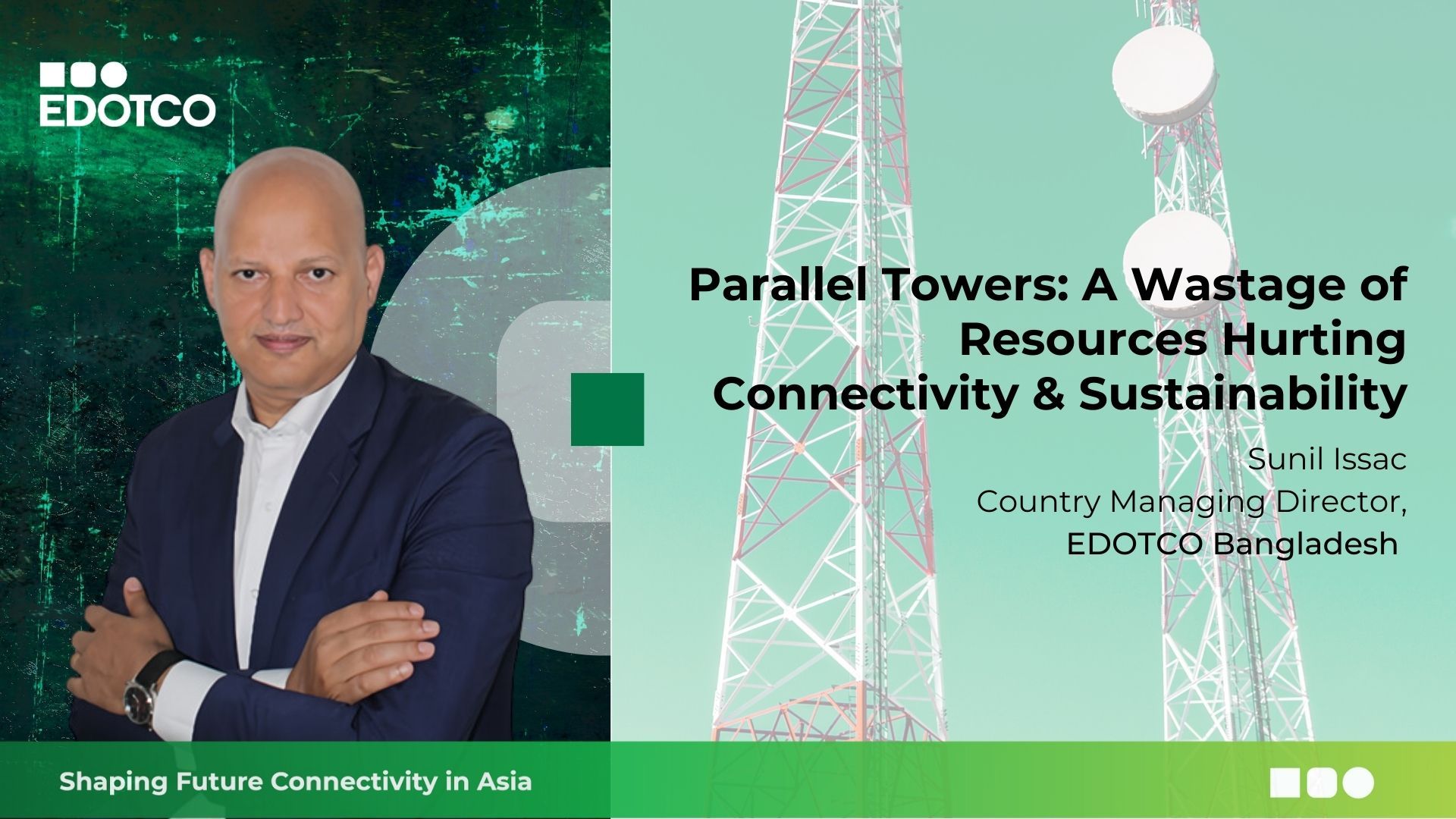
Last week, as I travelled along the Dhaka-Noakhali Highway on my way to Feni, a striking pattern caught my attention. At almost every stop, I noticed two or three telecom towers standing side by side, each belonging to a different tower company (TowerCo) or mobile operator. This particular photo, taken in Satubangha Bazar, Kutubpur, Feni Noakhali highway, is a prime example.
It made me pause and think: Why do we need so many towers in the same location when people in remote villages across Bangladesh still struggle for even basic mobile coverage?
This isn’t just a local issue—it’s a national one. These parallel towers, built by competing operators or TowerCos in the same spot, reflect inefficiency that impacts the entire telecom ecosystem.
Parallel Towers: A Problem We Can’t Ignore
Parallel towers occur when mobile operators independently build towers in the same area instead of sharing infrastructure. While competition is healthy, this approach leads to significant challenges:
- Resource Waste: Each tower uses land, materials, and energy that could be optimised through sharing.
- Higher Costs for Operators: Maintaining duplicate infrastructure cuts into the profits of Mobile Network Operators (MNOs).
- Increased Consumer Costs: Operators often pass these extra costs to consumers through higher service charges.
- Environmental Harm: Three towers use three times the power of one, increasing energy consumption and carbon emissions.
- Limited Coverage Expansion: Capital spent on redundant towers could instead improve network coverage in underserved areas.
Now, think of this using a simple analogy: imagine if every airline decided to build its own airport. Not only would it be wasteful and expensive, but smaller regions would likely be left without an airport altogether. The same principle applies to telecom towers—duplicating infrastructure benefits no one in the long run.
The Solution: Tower Consolidation
The answer lies in tower consolidation, where operators share existing towers or transfer ownership to specialised companies (TowerCos). With the right regulatory support, this practice is gaining traction globally and offers a win-win for all stakeholders.
Financial and Environmental Benefits of Tower Consolidation
- Unlocking Financial Resources for MNOs: Operators can sell their towers to TowerCos, generating revenue to invest in expanding coverage and rolling out technologies like 5G.
- Wider Network Coverage: Shared infrastructure allows operators to redirect resources toward improving rural connectivity, ensuring no one is left behind.
- Lower Consumer Costs: Cost savings from reduced duplication can lead to more affordable mobile services for users.
- Greener Operations: Fewer towers mean reduced power consumption and lower carbon emissions, helping Bangladesh meet its climate goals and align with global initiatives like SDG 13 (Climate Action).
The Role of Regulation
To make tower consolidation a reality, regulatory support is essential. Policies that encourage infrastructure sharing, enable fair pricing, and streamline the consolidation process will be key to unlocking these benefits for the telecom industry and the nation.
A Shared Vision for Bangladesh
As I looked at those towers along the highway, I couldn’t help but think: what if instead of three towers in one place, we had one shared tower, and the resources saved went toward connecting rural villages? This is the potential of tower consolidation—it creates a more efficient, sustainable telecom network that benefits operators, consumers, and the environment.
It’s time to rethink outdated practices and embrace smarter solutions. Let’s build a future where telecom infrastructure works for everyone, not just a few locations.
##END##
Written by
**Sunil Issac. Country Managing Director of EDOTCO Bangladesh **
About Sunil Issac
Sunil Issac joined EDOTCO Bangladesh as the Country Managing Director of EDOTCO Bangladesh on 1st May 2023. Sunil brings over 28 years of experience in telecom infrastructure and operations from the leading telecom vendor, Ericsson.
Sunil has a proven track record of providing successful infrastructure projects with innovative and customer-centric models and implementing large-scale digital and data-driven solutions with global and regional operators such as Axiata, Airtel, Zain, Millicom, Telenor, and Globe across Southeast Asia, Africa, and India
Related Posts




- Laman EDOTCO
- Block D, Dataran PHB
- Saujana Resort, Section U2
- 40150 Shah Alam, Selangor, Malaysia
- Tel: +6 03 2779 2699
- Hotline (WhatsApp): +6 019 372 1840
- Hotline (Office): +6 03 7890 5850
- Email: oc@edotcogroup.com

EDOTCO Group Sdn Bhd
(1022843-U)
For any towers or tenancy-related queries
related query, kindly contact:



© 2026 EDOTCO Group Sdn Bhd (1022843-U). ALL RIGHTS RESERVED.