EMOS: The Tower That Moves When Everything Else Stops
When a flood takes power lines and communication towers, the last thing people need is silence. In emergencies, mobile connectivity becomes more than just convenience, it’s survival. But permanent telecom infrastructure, by nature, doesn’t move. So EDOTCO built something that could: EMOS.
Short for EDOTCO Mobility Solution, EMOS is what happens when you take the brain of a telecom tower and give it wheels. It’s compact, self-contained, and ready to roll out at a moment’s notice. Where traditional infrastructure has limits, EMOS has none. It goes where it's needed, works with what telcos already have, and fits in places you'd never imagine hosting a tower.
And in today’s world, where climate disasters are more frequent, public events are more massive, and people expect always-on connectivity, EMOS isn’t just a backup plan. It’s a frontline solution.
Born from Real-World Challenges
EDOTCO didn’t dream up EMOS in the lab. It was built because the real world demanded it.
Across the markets where EDOTCO operates; Malaysia, Bangladesh, Philippines, Cambodia, and others, natural disasters are not rare. They are annual, cyclical, and increasingly intense. Floods wipe out roads. Earthquakes sever cables. Strong winds bring towers down. When these events hit, restoring mobile network coverage quickly becomes urgent but also incredibly complicated.
You can't just build a new tower in two days. And even if you had everything you needed, some locations simply aren’t accessible during the first few hours or days of a disaster. That’s where EMOS shines. It can be dispatched within hours. It doesn't need heavy equipment. It doesn't need a cleared field or a long lease.
All it needs is a bit of flat ground, a small space that can be easily located and utilised. But don’t mistake its size for limitation. It punches far above its weight.
Compact, But Capable
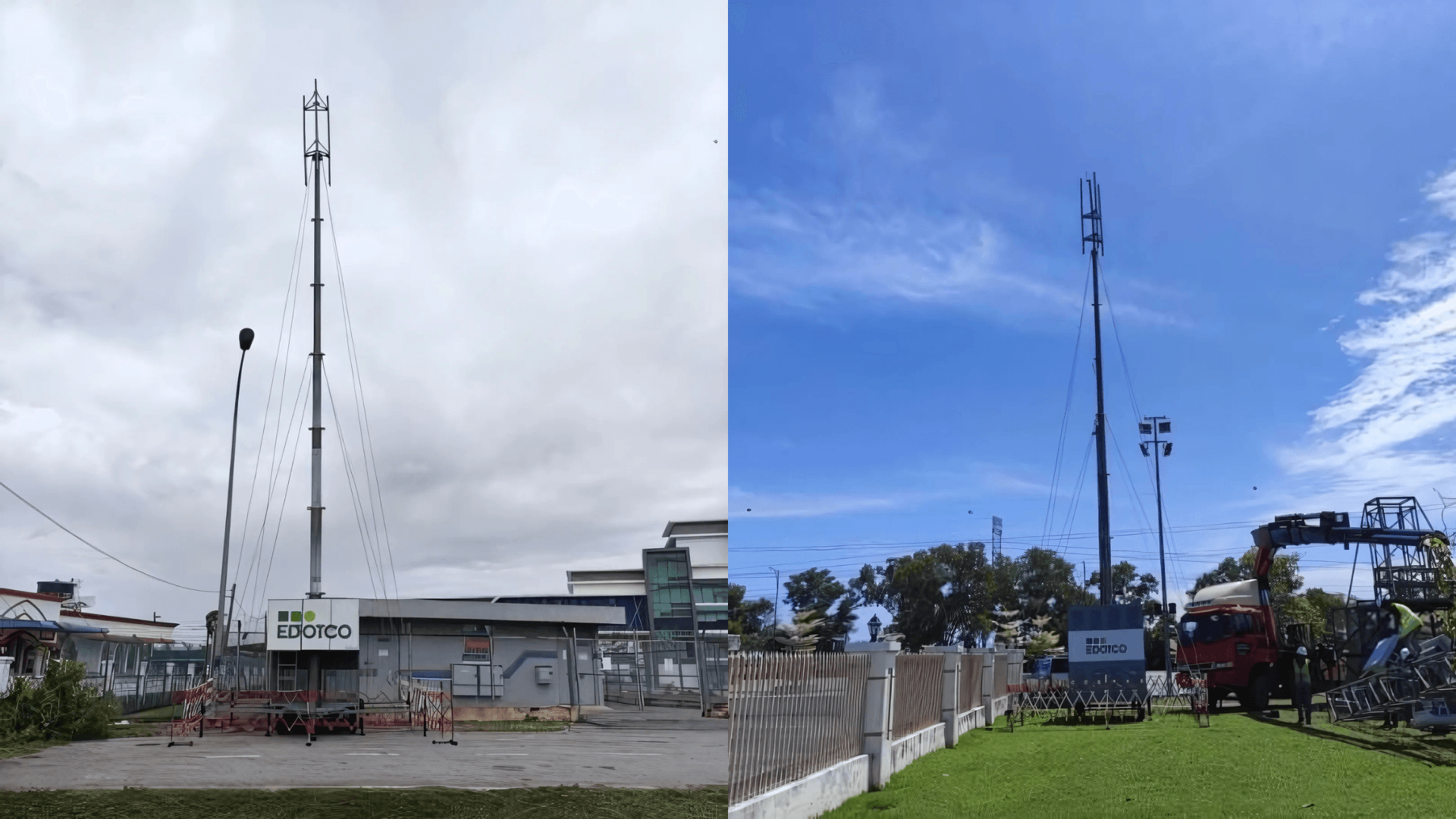
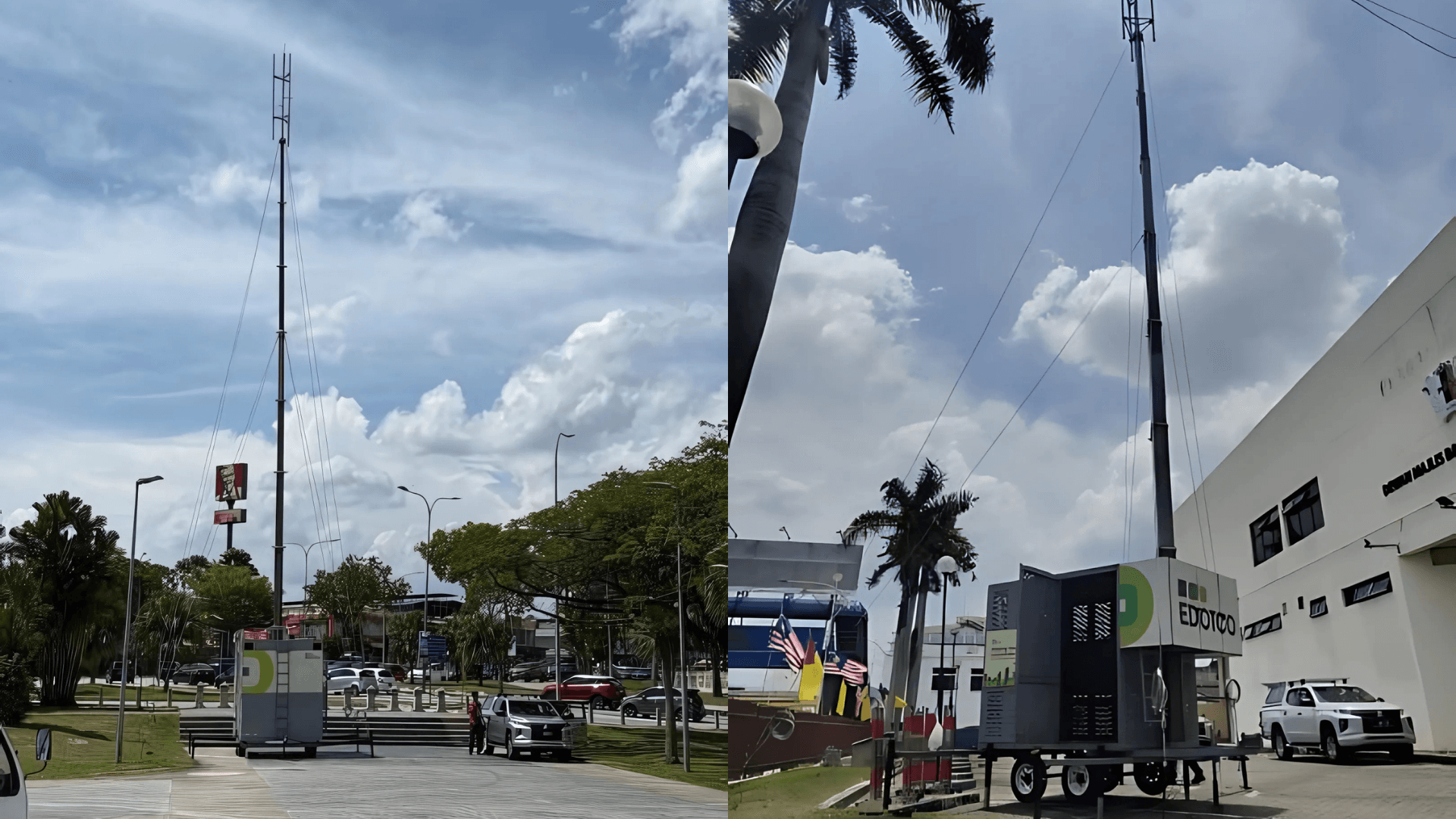
At first glance, EMOS looks more like a mobile broadcast truck than a piece of telecom infrastructure. It’s mounted on a four-wheel-drive vehicle, giving it the traction and agility to reach places most service trucks can’t. And once it arrives on site, deployment is fast.
At its heart is a telescopic mast that starts at around 3 metres and can extend up to 15 metres—or even 20 metres depending on the model. That’s tall enough to restore coverage across a disrupted area or support dense traffic at a major event, all from the footprint of a single car park space.
From there, it’s simple: mobile network operators bring their own nodeB and remote radio units (RRUs), plug them in, and they’re up and running. No cranes. No fibre trenching. No civil works. Just plug in and play.
In a way, EMOS is the opposite of over-engineered. It’s stripped down to what matters most: fast setup, reliable function, and ease of use. In the chaos of a disaster zone or the frenzy of a public event, that kind of simplicity becomes a superpower.
Not Just for Emergencies
While EMOS was built with emergencies in mind, it’s proving useful far beyond crisis response. Over the years, EDOTCO has deployed mobile solutions like EMOS to support network traffic during seasonal festivals, national sports events, and temporary infrastructure upgrades.
Take, for example, a large concert in a city centre. The existing towers nearby may be sufficient on a normal day, but when tens of thousands of people descend on the same area, all streaming, calling, and uploading at once, the network can struggle. Adding a fixed tower for a one-day event doesn’t make financial or logistical sense. But rolling out an EMOS unit does. It’s quick to deploy, easy to remove, and doesn’t require long-term commitment.
This kind of flexibility is becoming more valuable as telco infrastructure grows more complex. Urban density, zoning restrictions, and community resistance to permanent towers make it harder to build in some areas. With EMOS, telcos don’t always need to wait. They can bridge the gap whether for days, weeks, or months.
Infrastructure That Moves with the Moment
What makes EMOS different isn’t just that it’s mobile. It’s that it’s thoughtfully mobile. It’s built around real field constraints, space, time, access, and urgency.
That’s a hallmark of how EDOTCO approaches infrastructure. The company has long embraced a modular, scalable approach to tower design, integrating sustainability, community needs, and operational efficiency. EMOS is just the mobile expression of that same philosophy.
It’s also part of EDOTCO’s broader vision to strengthen national resilience through connectivity. When floods isolate communities, when earthquakes knock out power, when a country’s most vulnerable are suddenly cut off, the response must be fast and reliable. Traditional towers can’t always answer that call. EMOS can.
The ability to deploy mobile infrastructure at speed is no longer a luxury. It’s part of what defines a strong digital backbone. And as governments and operators across Asia invest in more climate-resilient and event-ready infrastructure, tools like EMOS are becoming essential.
Past Deployments: Proof in Action
EMOS has already made its mark across different types of deployments - showing just how versatile mobile infrastructure can be.
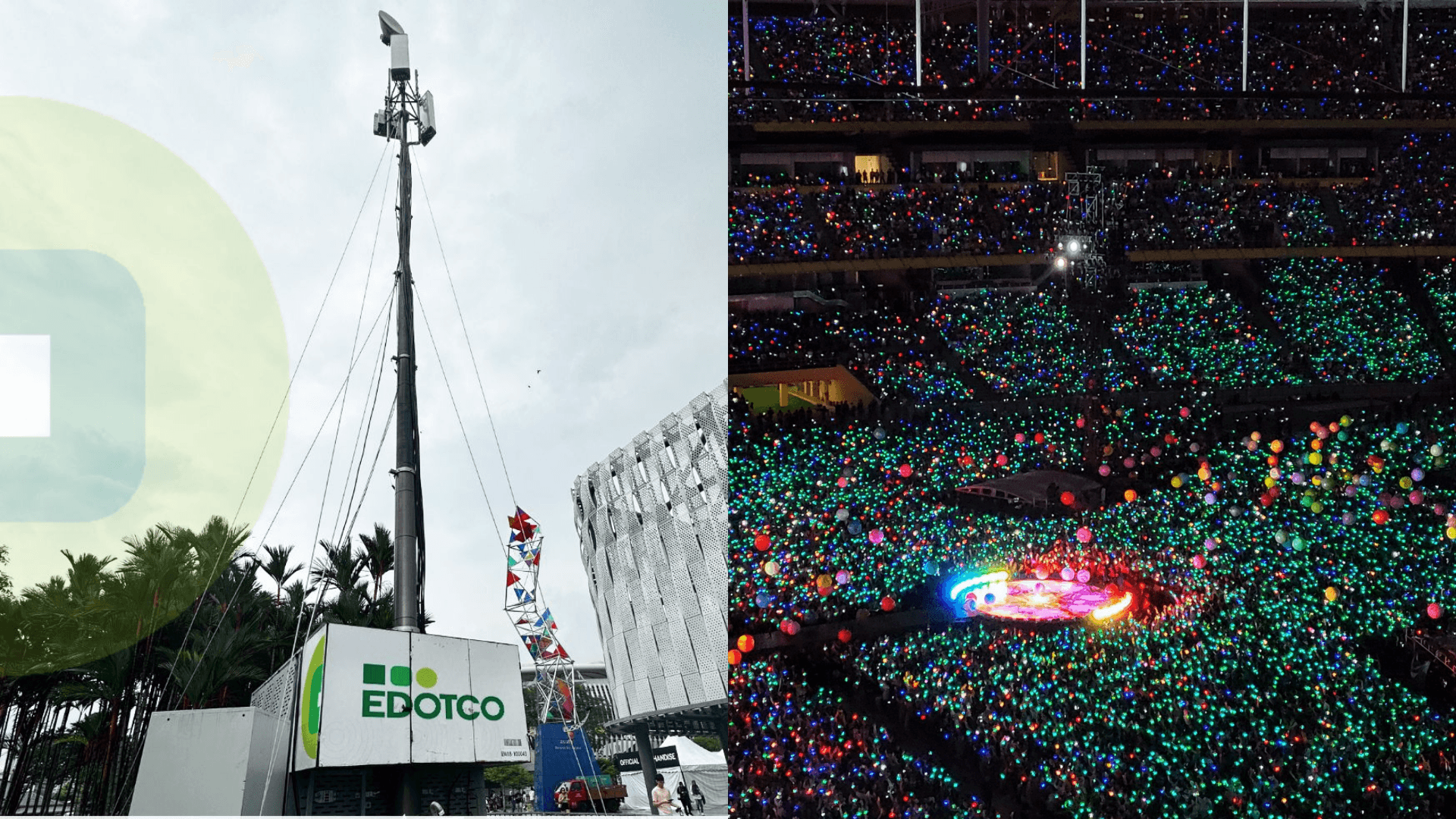
At the Coldplay Music of the Spheres World Tour in Kuala Lumpur back in 2023, the demand for connectivity spiked as tens of thousands of fans shared, streamed, and stayed connected inside Bukit Jalil National Stadium. Traditional towers alone could not have absorbed the surge. By rolling out EMOS, EDOTCO ensured seamless mobile coverage throughout the event, keeping the crowd connected from the first guitar chord to the final encore.
This year’s Merdeka celebrations also saw EMOS units deployed nationwide, from Perlis and Perak to Melaka, Kedah, Negeri Sembilan, Selangor, and Dataran Merdeka in Kuala Lumpur. Whether supporting parades, concerts, or state-level gatherings, EMOS helped ensure that moments of national pride could be shared in real time.
Beyond national events, EMOS has supported regional gatherings such as the Cycling Tour ASEAN Solidarity 2025 in Terengganu and large community festivals like NS Fest 2025 in Negeri Sembilan. These deployments highlight its versatility—bridging rural coverage gaps, reinforcing urban networks, and stepping in wherever demand outpaces capacity.
The Demand will Only Grow
As mobile technology evolves from 4G to 5G and beyond, the demand for adaptable, responsive infrastructure will only grow. Data needs are skyrocketing. Public expectations are higher. And disruptions, whether caused by weather, conflict, or capacity strain, are now part of the landscape.
EDOTCO knows that infrastructure can’t stay static. That’s why EMOS is built to evolve. It supports the equipment telcos already use. It’s compatible with future technologies. And it’s designed to be upgraded, relocated, and redeployed repeatedly.
The future of connectivity isn’t just about faster speeds or denser networks. It’s about resilience, mobility, and meeting people where they are, even if that’s in the middle of a muddy field after a storm.
EMOS aren’t flashy. It’s not meant to be. But when it shows up, people get to stay connected. And in moments that matter, that’s everything.
##END##
Written by
EDOTCO Editorial
Related Posts




- Laman EDOTCO
- Block D, Dataran PHB
- Saujana Resort, Section U2
- 40150 Shah Alam, Selangor, Malaysia
- Tel: +6 03 2779 2699
- Hotline (WhatsApp): +6 019 372 1840
- Hotline (Office): +6 03 7890 5850
- Email: oc@edotcogroup.com

EDOTCO Group Sdn Bhd
(1022843-U)
For any towers or tenancy-related queries
related query, kindly contact:



© 2026 EDOTCO Group Sdn Bhd (1022843-U). ALL RIGHTS RESERVED.